Actinomycetales
A key indicator of indoor environmental conditions for CIRS. Assess bacterial exposure in water-damaged buildings with greater clarity.
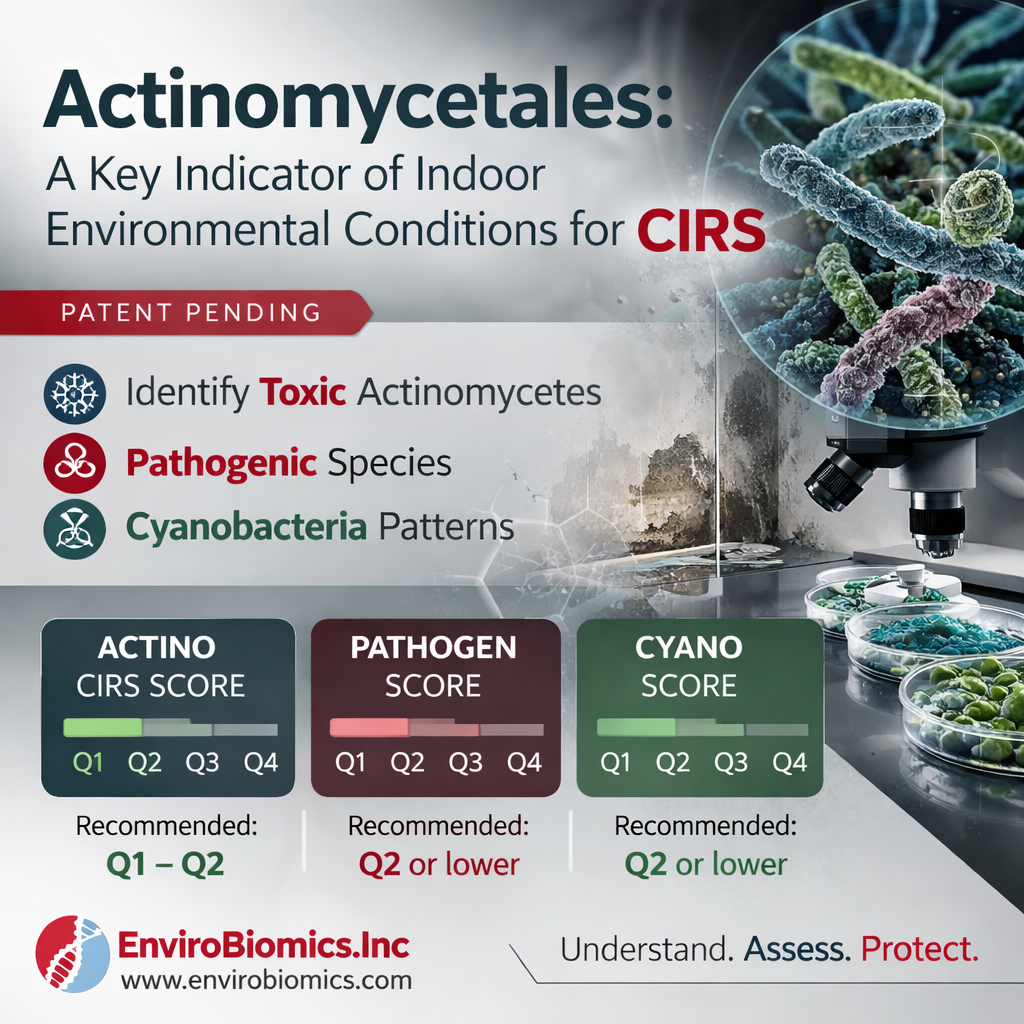
The Actino Test helps identify toxic Actinomycetes, pathogenic species, and Cyanobacteria patterns that may be relevant in water-damaged indoor environments, especially for individuals concerned about Chronic Inflammatory Response Syndrome (CIRS).
Professional web overview
This web-ready version is organized for visitors, practitioners, and indoor environmental professionals who need a clear online reference for Actinomycetes, CIRS-related environmental review, testing, prevention, and indoor air quality.
Core concepts
Actinomycetes are environmentally significant bacteria. In water-damaged buildings, certain Actinomycetes patterns may also be relevant to indoor exposure review.
What are Actinomycetes?
Actinomycetes are gram-positive bacteria mainly found in soil and in water-damaged houses. They often have a thread-like, filamentous structure and help break down organic material, enriching soil with nutrients.
Natural and pharmaceutical importance
Groups such as Streptomyces spp. are known for producing natural compounds with antimicrobial properties. Marine actinomycetes can also produce secondary metabolites, increasing their relevance in natural and pharmaceutical fields.
What is CIRS?
Chronic Inflammatory Response Syndrome (CIRS) is discussed here as a biotoxin-related illness associated with exposure to environmental toxins, including microbial contaminants in water-damaged buildings. Symptoms may include joint pain, fatigue, brain fog, and respiratory complaints.
Why water-damaged buildings matter
In water-damaged homes, fungi, Actinomycetes, Cyanobacteria-related patterns, microbial fragments, and other irritants may occur together. This combined exposure can complicate recovery and make indoor environmental assessment important.
Professional note
CIRS symptoms are non-specific and may overlap with many medical conditions. Environmental findings should be interpreted alongside clinical assessment by a qualified medical practitioner.
Actino testing for water-damaged buildings
The Actino Test is designed to identify 33 toxic Actinomycetes species and 11 control species, generating an Actino CIRS Score based on quartile distribution levels.
Measures selected toxic Actinomycetes associated with water-damaged or sick-building conditions.
Measures human-specific pathogenic Actinomycetes detected in the sample; especially important for inflammatory conditions.
Measures the distribution of toxic Cyanobacteria in the sample and should be interpreted in environmental context.
Recommended ranges for CIRS-related concerns
Actino CIRS Score: Q1 or Q2. Pathogen Score: Q2 or lower. CYANO Score: Q2 or lower.
How to interpret quartile levels
| Quartile | Interpretation |
|---|---|
| Q1 to Q2 | Generally considered the recommended range. |
| Q3 | May indicate a potential concern and should be interpreted with building conditions and species-level findings. |
| Q4 | Indicates a significant concern and should be reviewed carefully, especially when elevated species or pathogens are present. |
Why individual species matter
Summary scores provide a useful overview, but accurate interpretation depends on reviewing the results for each individual species.
Review concentration
Look at each species concentration in bacteria equivalents per milligram (B.E./mg). This helps identify which organisms are driving a score.
Look for asterisks
Asterisks indicate elevated levels relative to the normal reference distribution: * = 10-fold, ** = 100-fold, and *** = 1,000-fold higher than normal.
Prioritize Q4 findings
Q4 is the highest quartile and should be reviewed carefully, especially when multiple organisms are elevated or results align with moisture history.
Watch for P
A Q4 result with the letter P indicates an important human pathogen was detected at the highest possible level and may require closer review.
Practical review sequence
- Confirm sample context: sample location, collection method, building history, water-damage events, and remediation status.
- Review summary scores: Actino CIRS Score, Pathogen Score, and CYANO Score establish screening priority.
- Examine species details: identify Q3/Q4 organisms, asterisks, elevated markers, and species flagged as pathogens.
- Coordinate follow-up: use results to guide environmental review, remediation planning, cleaning verification, and medical discussion as appropriate.
Detailed review note
If results fall into the Q4 range, especially when elevated species are present, the findings should be reviewed with both an indoor environmental professional and the treating medical practitioner.
The connection between Actinomycetes and CIRS
The relationship between Actinomycetes and CIRS-related concerns is important when evaluating health complaints in buildings with moisture damage.
Release of airborne particles
When Actinomycetes grow in damp environments, they may release tiny airborne particles or fragments. These particles can degrade indoor air quality and contribute to irritation or immune responses.
Chronic exposure consequences
Ongoing exposure may keep the body in a repeated state of defense. For susceptible individuals, this persistent exposure can contribute to chronic inflammation and make recovery more difficult.
Bioactive compounds
In moist settings, Actinomycetes can produce bioactive compounds. Although some are useful in medicine or ecology, inhaled exposure in a contaminated building may aggravate symptoms.
Spore release and impact
Actinomycetes can emit spores and fragments that may enter the respiratory system, potentially worsening respiratory complaints and contributing to chronic symptom patterns.
Compounded environmental issues
Water-damaged buildings may contain Actinomycetes, fungi, Cyanobacteria-related markers, dust reservoirs, and other contaminants. This combination can create a difficult environment for recovery and underscores the need for comprehensive indoor air quality management.
Recognizing signs and symptoms of CIRS
These signs do not confirm CIRS by themselves, but they may justify further environmental and medical review when they occur alongside known or suspected water-damaged building exposure.
Persistent exhaustion
Ongoing fatigue that does not improve with rest can affect productivity, daily responsibilities, and overall well-being.
Cognitive difficulties
Brain fog may include memory lapses, slowed thinking, word-finding difficulty, or trouble concentrating.
Joint and muscle pain
Unexplained aches, pain, or stiffness may occur in different parts of the body and should be reviewed alongside exposure history.
Unexplained weight changes
Unexpected weight gain or loss without a clear dietary or lifestyle change may suggest broader inflammatory or metabolic disruption.
Additional symptoms
Other potential signs include headaches, sensitivity to light, shortness of breath, mood changes, sinus complaints, sleep disruption, and intolerance to damp or musty environments. Seek medical evaluation for persistent, worsening, or severe symptoms.
Diagnosing Actinomycete-related CIRS concerns
Evaluation should consider both the indoor environment and the person affected, then interpret findings together.
Indoor air quality testing
Assessment of indoor air and settled dust can help identify harmful microbial particles, including Actinomycetes and other organisms that could be contributing to symptoms.
Medical assessments
Clinicians review symptoms, exposure history, and medical background. They may consider inflammatory markers or other tests to understand health impact.
Soil, dust, or environmental sampling
Sampling from suspected exposure areas provides information about microbial presence and contamination patterns relevant to building conditions.
Phylogenetic and species analysis
DNA-based analysis can help identify bacterial lineages, strains, or species. Species-level identification can support more targeted follow-up actions.
Integrated interpretation
No single test should be interpreted in isolation. Sample location, water-damage history, visible microbial growth, HVAC conditions, cleaning practices, occupant symptoms, and medical findings all affect interpretation.
Treatment-support themes for CIRS
Addressing CIRS-related concerns generally requires a plan that reduces exposure while supporting personal health. These are educational themes to discuss with qualified professionals.
Reducing exposure
Minimize contact with Actinomycetes and other harmful microorganisms by correcting leaks, removing contaminated materials where needed, improving ventilation, cleaning reservoirs, and using appropriate filtration.
Clinician-guided detoxification support
Detoxification support aims to help the body eliminate toxins through practitioner-selected protocols, hydration, supplements, and other supportive interventions.
Lifestyle adjustments
Regular movement, stress-management practices such as meditation or yoga, and adequate rest may support immune resilience and recovery capacity.
Nutritional support
A balanced diet emphasizing lean proteins, vegetables, fruits, whole grains, and healthy fats may help reduce inflammatory burden and support healing.
Medical supervision
Any detoxification, supplement, medication, or therapeutic protocol should be reviewed by a licensed medical practitioner, especially for individuals with complex inflammatory conditions.
Preventive measures and indoor air quality
Protecting against CIRS-related exposure involves proactive home maintenance, moisture control, indoor air quality management, and personal wellness practices.
Address leaks quickly
Fix leaks and water problems immediately. Moisture creates favorable conditions for Actinomycetes, fungi, and other microorganisms.
Have proper ventilation
Use exhaust fans in kitchens, bathrooms, laundry areas, and other damp spaces. Open windows when outdoor conditions are appropriate to improve air exchange.
Conduct regular inspections
Inspect for visible mold, moisture staining, condensation, musty odors, plumbing leaks, roof issues, and HVAC problems.
Support immune resilience
Balanced nutrition, hydration, sleep, and stress management can support the body's defenses against environmental stressors.
Improving indoor air quality
| Action | Professional rationale |
|---|---|
| Use air purifiers with HEPA filters | High-quality HEPA filtration can capture microscopic particles such as dust, mold spores, bacterial fragments, and other allergens. |
| Maintain HVAC systems | Regular filter replacement, ductwork review, and equipment maintenance reduce dust accumulation and prevent redistribution of pollutants. |
| Maintain humidity between 30% and 50% | Appropriate humidity helps inhibit mold and bacterial amplification while keeping the indoor environment comfortable. |
| Choose low-VOC products | Low-VOC paints, cleaners, and household products reduce chemical emissions that can add to indoor air burden. |
Environmental detox after remediation
After moisture correction and remediation, detailed cleaning and verification testing may be needed to reduce residual dust and microbial reservoirs. The specific approach should be guided by building conditions and professional recommendations.
Host Actino testing and key facts
Persistent concerns after remediation may require a coordinated review of environmental results, host results, symptoms, and treatment decisions.
Host Actino testing
Toxic Actino species may also be found at abnormal levels in host samples such as skin, nasal, stool, and, in some circumstances, blood-related samples. If CIRS-related concerns persist after remediation, host testing may be discussed with a qualified medical practitioner.
Host testing caution
Host Actino testing should be considered only under medical supervision. Environmental results, host results, symptoms, and treatment decisions should be interpreted together.
Key facts about Actinomycetes in CIRS-oriented review
Actinomycetes thrive in water-damaged environments, often alongside mold. CIRS-oriented materials frequently discuss species such as Cutibacterium acnes and Corynebacterium tuberculostearicum, immune activation in susceptible individuals, non-specific symptoms such as fatigue and brain fog, specialized dust testing, remediation, deep cleaning, and clinician-directed care.
Abbreviations used in the report
Use these definitions when reading the full laboratory report or discussing results with professionals.
| Abbreviation | Meaning |
|---|---|
| B.E. | Bacteria Equivalents |
| B.E./mg | Bacteria Equivalents per milligram of sample |
| P | Human pathogen |
| Logs | Logarithms |
| ND | None detected |
| Q1-Q4 | Quartile ranking used to compare the result with the reference distribution |
| * | 10-fold higher than normal |
| ** | 100-fold higher than normal |
| *** | 1,000-fold higher than normal |
| C | Comments |
| E | Elevated |
Reference distribution note
Normal values are based on bacterial distribution in 5,000 U.S. samples. Species distribution is ranked into quartiles, and elevated species are highlighted using Q3 and Q4 color coding.