
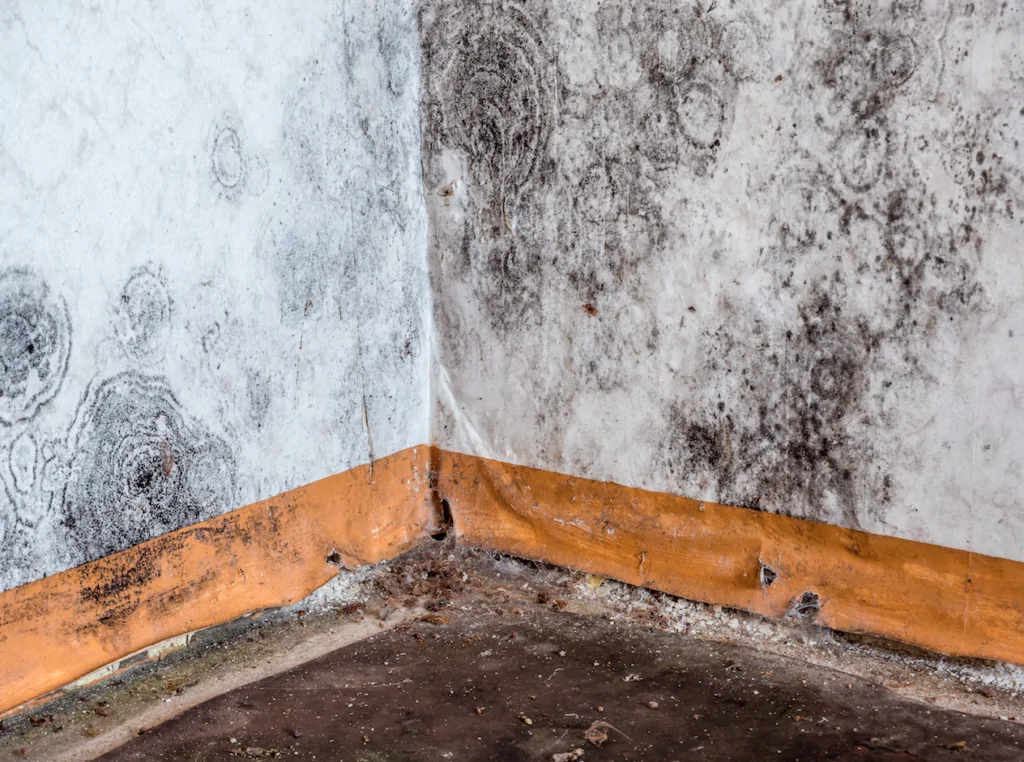
What is ERMI? The Environmental Relative Moldiness Index (ERMI) is a method used to evaluate selected mold species in settled dust from indoor environments. It uses DNA-based laboratory analysis to measure the concentrations of 36 selected mold species and provides an ERMI Score that can help put the sample’s mold profile into context.
ERMI testing can provide useful environmental information when investigating homes and buildings with current or previous moisture problems, water damage, or concerns about indoor mold.
What Is ERMI?
ERMI stands for Environmental Relative Moldiness Index. The methodology uses mold-specific quantitative PCR (MSqPCR), a DNA-based laboratory technique, to measure selected mold species in a dust sample.
Rather than relying only on visible mold or a short-term air sample, ERMI evaluates mold DNA present in settled dust. This can provide additional information about the fungal profile of the sampled indoor environment.
How Does ERMI Testing Work?
An ERMI Mold Test analyzes 36 selected mold species or groups. These are organized into two groups that are used in calculating the ERMI Score:
- Group 1: 26 mold species or groups historically associated with water-damaged environments.
- Group 2: 10 mold species or groups commonly found in indoor environments.
The laboratory measures the concentration of DNA from these selected molds in the submitted dust sample. Those results are then used to calculate the ERMI Score.
What Is an ERMI Score?
The ERMI Score is calculated using the concentrations of the Group 1 and Group 2 molds detected in the sample. The result provides a relative index that can be compared with the reference data used to develop ERMI.
A higher score generally reflects a greater relative contribution from the Group 1 molds included in the calculation. However, an ERMI Score should not be interpreted by itself as proof of active mold growth or as a medical assessment.
What Does an ERMI Mold Test Measure?
ERMI testing measures DNA from a defined panel of selected mold species in settled dust. The laboratory report can provide:
- Concentrations of the selected mold species detected
- Group 1 mold information
- Group 2 mold information
- An ERMI Score
- A quantitative environmental laboratory report
Because the analysis is based on DNA, the presence of fungal DNA does not by itself establish whether the detected mold is currently viable or actively growing.
When May ERMI Testing Be Useful?
Environmental mold testing may provide additional information when investigating an indoor environment, particularly when there are questions involving:
- Current or previous water damage
- Moisture intrusion or persistent dampness
- Past mold growth or remediation
- Indoor environmental quality
- A property being evaluated before purchase or occupancy
- The need for quantitative information about selected molds in settled dust
Laboratory results are most informative when considered together with the building’s history, moisture conditions, visual observations, sampling conditions, and other relevant environmental information.
ERMI Testing vs. Traditional Air Sampling
ERMI testing and air sampling evaluate indoor environments differently. An air sample represents airborne material collected during a relatively short sampling period, while ERMI evaluates selected mold DNA present in settled dust.
These approaches answer different environmental questions. The appropriate sampling method depends on the building, the purpose of the investigation, and the information being sought.
Does a High ERMI Score Mean There Is Active Mold Growth?
Not necessarily. ERMI detects and quantifies DNA from selected molds in the submitted dust sample. Mold DNA may remain detectable even when the organisms are no longer actively growing.
For that reason, ERMI results should be evaluated alongside moisture history, building inspection findings, visible conditions, and other relevant environmental evidence.
Does ERMI Diagnose Mold-Related Illness?
No. ERMI is an environmental testing method, not a medical diagnostic test. Results describe characteristics of the submitted environmental sample and do not diagnose allergies, infections, toxicity, CIRS, or other medical conditions.
Questions about symptoms, exposure, or personal health should be discussed with an appropriate healthcare professional.
How to Order an ERMI Mold Test
EnviroBiomics offers laboratory ERMI testing for environmental dust samples. Your kit includes the materials and instructions needed to collect and submit your sample for laboratory analysis.
Looking for More Detailed Fungal Analysis?
Standard ERMI focuses on a defined panel of selected mold species. If you need a broader fungal profile, EnviroBiomics also offers ERMI200, which expands the environmental analysis beyond the standard ERMI panel.
Important to Know
Environmental laboratory results provide information about the submitted sample. Detection of fungal DNA does not by itself confirm active mold growth, identify the source of contamination, establish exposure, or determine whether a building is safe or unsafe.
Results should be interpreted in the context of the building, sampling conditions, moisture history, visual observations, and other relevant environmental findings.